
#58: repurposed antidepressant helps fatigue

Hello Long Hauler fam,
☀️ Here are 3 research findings, 2 thoughts, and 1 question to consider this week. Plus a movie recommendation and the usual cute puppy pic.
3 IDEAS FROM RESEARCH
I.
A recent trial found that fluvoxamine improved fatigue and quality of life in Long Covid, while metformin did not.
This stands out because fatigue is one of the hardest symptoms to treat across both Long Covid and ME/CFS. It is not a cure, and the study window was relatively short, but it is one of the clearest recent signals that a repurposed drug might meaningfully shift symptoms.
It also reinforces the idea that targeting brain-immune signalling pathways could be more useful than general “recovery” approaches.
Source: https://scholars.duke.edu/publication/1709678?
II.
The major NIH study program RECOVER is now testing baricitinib, an immune-modulating drug, for Long Covid.
This matters because it reflects a shift toward targeting specific biological mechanisms, not just symptom management. Baricitinib is already used in other inflammatory conditions, so if it works here, it could move relatively quickly into clinical use.
It is still early, but this is the kind of trial that could directly translate into treatment options.
Source: https://recovercovid.org/news/recover-tlc-opens-expanded-enrollment-reverse-lc-clinical-trial
III.
A new cerebrospinal fluid study in ME/CFS identified distinct protein patterns linked to neuroinflammation, autonomic dysfunction, and metabolism.
This is not a treatment yet, but it is a step toward objective biology. Instead of describing symptoms, researchers are starting to map what is actually happening in the nervous system.
Because Long Covid and ME/CFS overlap so much, findings like this could help define subtypes (rather than treating these illnesses as one big blurry category) and guide more targeted treatments over time.
Source: https://www.nature.com/articles/s41598-026-46965-1
2 THOUGHTS
I.
The most promising thread across all three is this: the field is slowly shifting from “managing symptoms” to testing specific mechanisms.
Drugs like fluvoxamine and baricitinib are not random guesses. They are being chosen based on hypotheses about immune signalling and inflammation.
That is a meaningful step toward treatments that are based on cause, not just coping.
II.
At the same time, biomarker work is catching up. The more clearly researchers can measure what is happening, the easier it becomes to match the right treatment to the right group.
This combination, better measurement plus targeted trials, is where real progress is likely to come from.
BONUS:
I watched a brilliant movie recently - I Swear. It’s the story of a guy with Tourette’s, struggling with developing the condition as a kid, facing constant barriers to living a normal life due to his mind and body working in a way outside his control… sound familiar? Although we are at the opposite end of the spectrum in terms of visible/invisible disabilities(!) it still really resonated with me. It’s a beautiful film showing the hardships but also the power of a kind helping hand, muddling through and making the best of a bad hand, and the sweetness of doing what you can to help others. I recommend! Oh and it’s funny :)
1 QUESTION FOR YOU
What’s something you care about now that you probably would have laughed at (or never thought of) pre-illness?
Pooch pic 📷 - yin yang
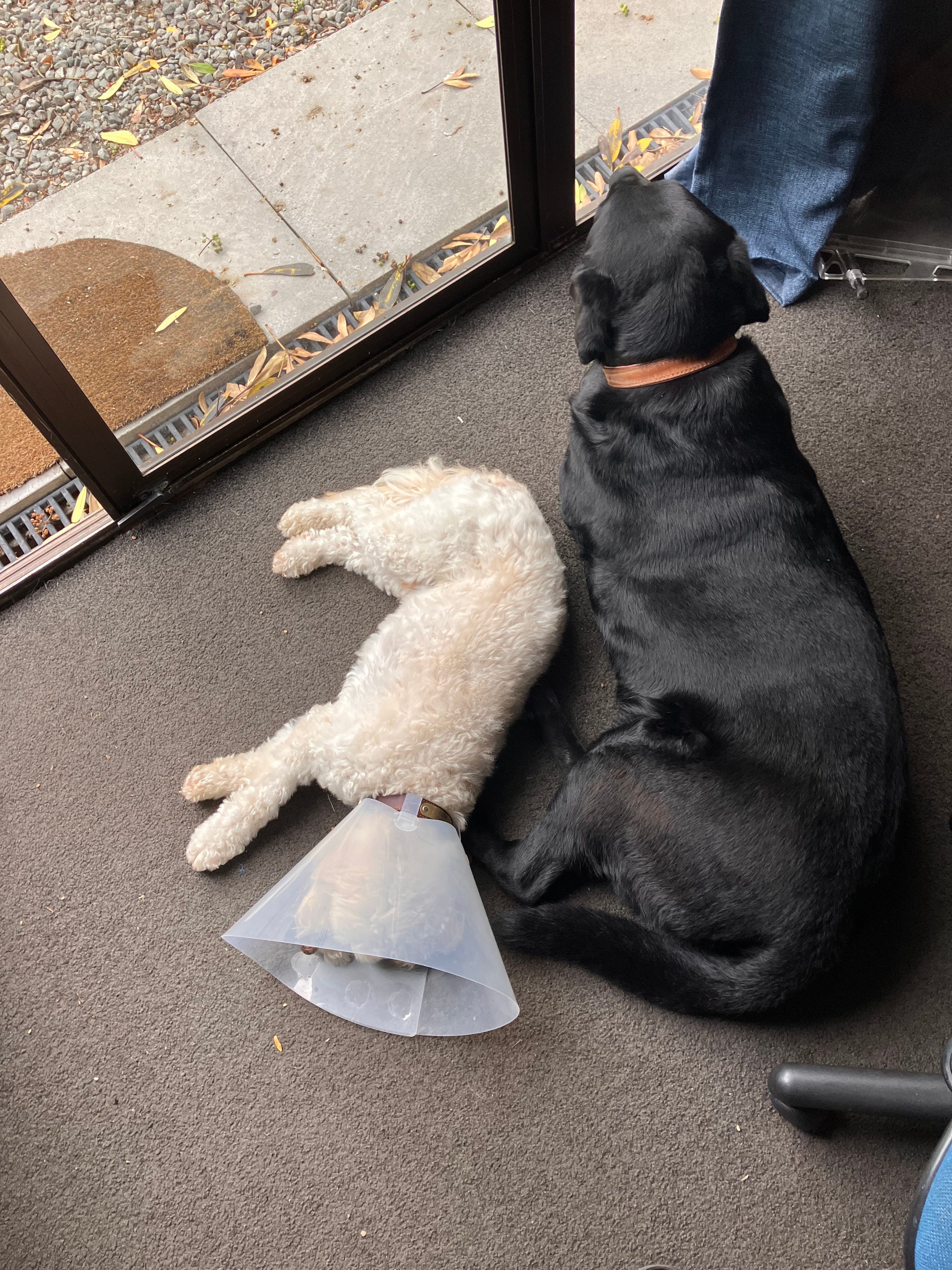
Alt text: Whisky the cream toy poodle and Monty the curl up together. (Whisky has a cone of shame on due to a broken nail- nothing too serious).
Wishing you a peaceful week
Tom and whisky
Thanks for the excellent info Tom. Any thought on GLP1s . I see there’s a new trial already underway ? https://longcovid.scripps.edu/locitt-t/
Saw the film! A great movie . Laughed and cried !
Loved the pooch pic ☺️